


 Health and Medicine
 PUBLISHED

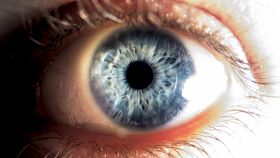


There are a trillion species alive today, at least – and most of them are microbial, which makes finding them a little tricky. Plenty of them are hiding in the oceans, mountains, caves, swamps, forests, and even skies of the world, and some can be found quite literally right under our nose.
Just last year, a new superbug-killing, antibiotic-producing bacteria was found hiding within our nasal cavities. Now, according to a new study in the journal Immunity, a new (and fortunately beneficial) form of bacteria has been found in the lining of the eyes of mice. Related strains of bacteria have been found in the eyes of humans, so it’s likely this new species is living in our (literal) line of sight too.
This bacteria, Corynebacterium mastitidis, seems to help these lucky mice fend off various pathogens, particularly bacterial conjunctivitis – also known as “pink eye”. Far from just attacking the invading bacteria themselves, this friendly microbe appears to be doing something rather more interesting.
Mice that suffer from pink eye tend to lack an immune molecule named IL-17, which registers the appearance of a hostile pathogen and summons immune cells to neutralize them. The common strains of mice that have IL-17 also seem to have C. mastitidis in significant quantities, and they appear to be triggering an IL-17 response themselves, which protects the eyes from contracting conjunctivitis.

Make no mistake: Every part of us, inside and out, is riddled with bacteria, both beneficial and hostile.
The mucous membranes that cover the front of the eye, the conjunctiva, are home to a range of bacteria despite the fact that our semi-sterilizing tears clean them every time we blink. In fact, there are so many species swimming around on them that they form a veritable “microbiome”, a microscopic and biodiverse world of interacting bacteria – just like the one in our digestive systems.
This “ocular microbiome” has been found to contain strains of a large variety of bacterial DNA before, but plenty of these results have been hotly debated. Contamination of samples is simply too likely in most cases.
“People have been finding bacterial DNA on the human eye but no one has presented experimental proof that these bacteria actually live there,” senior co-author Rachel Caspi, an immunologist at the National Institutes of Health (NIH), said in a statement.
This study instead took swab samples of the conjunctiva of these mice’s eyes and then cultured the bacteria samples in the lab to conclusively prove that they existed. C. mastitidis was one of those that emerged from the slime.
If the same strain is found in human eyes, these bacteria could be used to inoculate vulnerable people from bacterial conjunctivitis.
[H/T: Gizmodo]


 8
8