Health and Medicine
 PUBLISHED


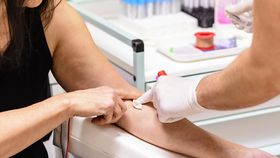


Researchers are developing blood tests that are so sensitive they may one day be used routinely by doctors to monitor tumors, and even check if patients have undiagnosed cancer. Researchers announcing their preliminary results at the American Society of Clinical Oncology conference in Chicago this week say they have made major steps forward towards “liquid biopsies”.
To fully and effectively diagnose cancer, doctors typically have to perform a biopsy on the tumor in question. This surgery can frequently be invasive and is sometimes unsuccessful. The full and proper diagnosis of cancer can be critical to the survival of a patient, allowing doctors to personalize and focus treatment more precisely, making the development of a non-invasive tool all the more powerful.
When blood flows through a tumor, tiny bits of dead tissue including DNA are shed into the blood stream. Now, in theory, the liquid biopsy should be as simple as a blood test that should be able to pick up these bits of cancerous DNA and identify the cancer. But, as ever, it is not that easy. This is because these little pieces of “cell-free” DNA only make up a tiny fraction of what usually constitutes blood.
Not only that but, as you would expect, tumors are not the only tissues shedding these bits of cell-free DNA into the blood. This means that the cancerous strings of genetic code that might flag a tumor up account for an even smaller proportion of cell-free DNA in blood, just 0.1 percent by some estimates. This makes searching for and finding the DNA shed from tumors akin to finding a needle in a haystack.
But researchers think that they have managed to refine a blood test to such a degree that they can successfully detect these vagrant bits of DNA floating around in the blood, and hope that they can refine it even further to increase its accuracy. On initial tests of 124 patients with either breast, prostate, or non-small cell lung cancer, they were able to pick up cancerous DNA in 89 percent of the participants, with this figure rising to an impressive 97 percent for those with breast cancer.
This is only a limited study, using a small number of patients, but the researchers think that the preliminary results are promising. They don’t expect that the test will be available to a wider audience for quite some time, but they hope that eventually it may one day be used as a started test when patients go to a doctor for routine check-ups.