


 Health and Medicine
 PUBLISHED


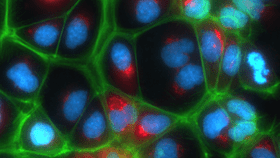


The human liver is an incredible organ. It is one of the few organs that can regenerate, with people able to lose as much as 75 percent and yet still grow it back. With such incredible regeneration abilities, you might think that liver cells would be fairly easy to grow in the lab, but they’re not. Most attempts to expand and grow human liver cells in the lab, known as hepatocytes, result in immortalized cancer cells with not much metabolic function.
Now, it seems that a team of researchers from The Hebrew University of Jerusalem have been able to overcome this. They found a new technique that allows them to rapidly grow fully functional hepatocytes with no loss of metabolic function. “This is the holy grail of liver research,” says Professor Yaakov Nahmias, who led the study published in Nature Bioengineering, in a statement. “Our technology will enable thousands of laboratories to study fatty liver disease, viral hepatitis, drug toxicity and liver cancer at a fraction of the current cost.”
As the liver is largest internal organ and the main site of metabolism, human liver cells are often used by drug companies to investigate how the body might process and clear a drug, such as how two different drugs might interact. Not only that, but human liver cells are also useful in a clinical setting, for example in creating bio-artificial liver support for those waiting for liver transplants. And yet getting the cells to grow and divide, whilst retaining their original function, has not been possible. And with few donors, it has limited possibilities for clinical and pharmaceutical development.
But by taking two genes from the human papilloma virus, called E6 and E7, they were able to free the lab-grown liver cells from being in cell-cycle arrest when exposed to Oncostatin M (OSM) – a particular protein involved in liver regeneration – allowing the cells to grow and divide. Normally, when researchers have tried to get hepatocytes to regenerate, they’ve inadvertently turned them into cancer cells, growing uncontrollably. But by only selecting those cells in which the growth is tightly controlled by OSM, this new research allows the scientists to precisely constrain the level at which the cells divide.
The researchers hope that by being able to form fully functional, regenerative liver cells in the lab, it could open the way for better, more informative drug studies. They note that genetic mutations will be needed before the cells can be used for transplantations, but this could potentially be the perfect source of cells for the creation of bio-artificial livers, which patients who are waiting for a full transplant could be hooked up to.

 1
1