Nature
 PUBLISHED




It looks like more doom and gloom for the world’s brightest and most vibrant ecosystems: coral reefs.
The National Oceanic and Atmospheric Administration (NOAA) has warned that “higher-than-normal sea temperatures” for the third consecutive year will continue to make this the longest and the most widespread coral bleaching event ever recorded.
In April this year, it was reported that 93 percent of the Great Barrier Reef was bleached and 50 percent was dead or in the process of dying. However, NOAA believe reefs in the United States will also suffer significantly, particularly coral reefs around Hawaii, Guam, the Commonwealth of the Northern Mariana Islands, Florida Keys, US Virgin Islands, and Puerto Rico.
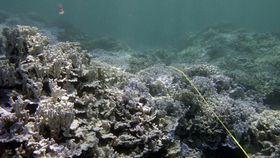
Coral bleaching is when the symbiotic algae that live on the coral become stressed due to increased ocean temperature or pollution, and subsequently leave the coral’s tissues. In the absence of their algae partners, the coral lose a major source of food and become highly susceptible to disease. This process also leaves them looking pale and white.
This particular coral bleaching event has been ongoing since mid-2014, thanks to increased ocean temperatures from climate change and a particularly aggressive El Niño. NOAA researchers believe this current bleaching event will continue and gain momentum from the highly probable upcoming La Niña. La Niña is seen as the cooling counterpart of El Niño, although it can cause high ocean temperatures in the western Pacific.
Coral bleaching is perhaps one of the more “in your face” casualties of climate change, but the value of reefs goes far beyond their pretty colors. Coral reefs are commonly cited as the most “economically valuable” ecosystems. Not only do they provide local economies with tourism and recreational activity, they also provide breeding grounds for a diverse array of marine life and are a source of new medicines. An independent study found that coral reefs provide the United States alone with around $483 million, according to NOAA.
There’s still hope, though. As NOAA explain, corals are resilient organisms that are capable of remarkable levels of recovery. As they say: “Just as a healthy person is more able to fend off a cold, healthy corals are more likely to resist large-scale stress like a bleaching event.”

Infographic showing how and why corals become bleached. Image credit: NOAA
"It’s time to shift this conversation to what can be done to conserve these amazing organisms in the face of this unprecedented global bleaching event," said Jennifer Koss, NOAA’s Coral Reef Conservation Program director, in a NOAA statement. “We have boots on the ground and fins in the water to reduce local stressors. Local conservation buys us time, but it isn’t enough. Globally, we need to better understand what actions we all can take to combat the effects of climate change.”