Nature
 PUBLISHED


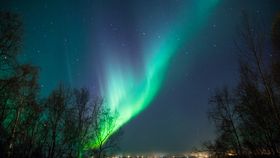


The Aurora Borealis is known around the globe for its speculator show of swirling green and purple lights. However, its accompanying sound-effects are comparatively less famous.
This strange acoustic phenomenon can create mysterious "clapping" or "popping" noises, occasionally heard around sightings of the Northern Lights. Now, thanks to work by a solitary Finnish researcher, science has finally come a little bit closer to understanding and explaining the mechanism that creates these noises.
Professor Unto Laine of Aalto University in Finland has previously explained that the sounds are caused by the same energetic particles that create the lights themselves. He has now followed this up by attempting to explain the circumstances and conditions that favor this outburst of audible energy, in what he calls the "inversion layer hypothesis."
Laine collected data in the -20°C (-4°F) temperatures of southern Finland during March 2013, following up from previous work in 2012. His study shows that two specific conditions need to happen to create the sounds. The first is clear and calm weather conditions, which means in the evening or night cold air is nearer Earth’s surface and marginally warmer air is higher up. The air doesn’t mix and creates an inversion layer, or “lid”, around 70 meters (230 feet) up in the air.
“The inversion layer forms a kind of lid hindering the vertical movements of the charges. The colder air above it is charged positively," Laine explained in a statement.
The second condition is a geomagnetic storm, which "causes the accumulated charges to discharge with sparks that create measurable magnetic pulses and sounds.”
The was also a notable correlation between the strength of the electromagnetic activity and the loudness of the noise. The sounds can be heard with the naked ear, but optimal conditions are tricky to come across.
“Even a small wind can prevent the birth of an inversion layer, which means no sounds will be created,” he added.
The project has been in the works for some 17 years. Xinhua news agency reports that his work was met with disbelief and cynicism when he first proposed it, and said NASA denied the existence of the noises in the 1960s.
Although Laine says his idea is simply a hypothesis for now, his work includes the first audio recordings of the noises (above). The research also found that the actual light show is often more vibrant further north, but his documentation appears to show the loudest sounds in southern Finland.
[H/T: Live Science]