


 Nature
 PUBLISHED


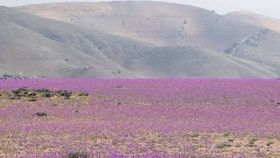


The Atacama Desert is a by-word for aridity, the driest places on Earth outside the poles. Exceptions come in El Niño years, and with the strength of this year's event flash floods killed twenty five people. There has been a positive side to this disaster however, with the normally bare rocks brought to life.
 The Atacama in more normal times. Credit: adwo/shutterstock
The Atacama is so dry from a combination of the rainshadow of the Andes to the east and the coldness of the Pacific Ocean to the west.
Areas with average rainfall below 250 millemeters (10 inches) per year are considered deserts; even the wetter areas of the Atacama get less than a hundredth of that. In some parts rain has never been recorded. This, in combination with the high altitude, has made it an ideal site for large telescopes.
Around the absolute desert lies territory where rain is rare, but not unknown. As in other deserts, life has evolved to survive the long dry periods, ready to burst forth when water becomes available, a phenomenon known as desierto florido, the flowering desert.

A previous burst of flowers in the Atacama. Credit: Ksenia Ragozina/Shutterstock

Credit: Flickr: Alejandro Soffia CC By-NC-ND 2.0
El Niño gets its name from the warming of the Pacific Ocean off Peru around Christmas time. The warm waters produce more evaporation, and thus more chance of rain clouds reaching the desert, while in other parts of the world El Niños bring drought.

Credit: Ksenia Ragozina/Shutterstock
[H/T ABC.net.au]
Top image from Flickr: Juan Benavente Baghetti CC By-NC-ND 2.0


 1
1