Humans
 PUBLISHED
 1
1




It’s with great sadness that we bring you the latest update on the “unluckiest guy in history”. One month ago, archaeologists at the Pompeii archeological site discovered a skeleton that appeared to have been crushed by a giant boulder as he was fleeing the notorious volcanic eruption of Mount Vesuvius over 1,900 years ago.
This unfortunate fellow captured the world’s imagination, like an ancient antihero fresh out of a Wile E. Coyote cartoon. During his 15 minutes of fame, he achieved stardom as one of the world’s oldest ever viral celebrities, briefly becoming the Internet's new favorite meme as we giggled apologetically at his unlikely fate (just like this guy before him).
However, the discovery is not quite as it first appeared. It’s now emerged that the initial analysis might have been wrong.
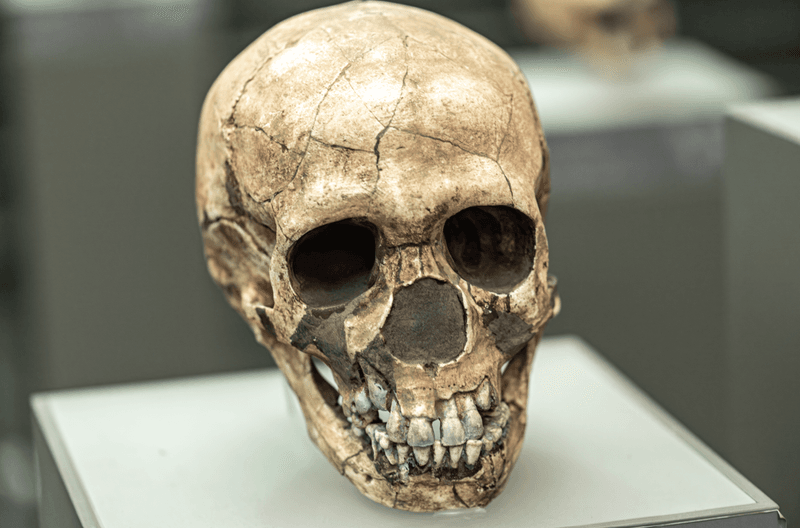
Archaeologists have since managed to remove the giant rock from the ground, only to reveal that the man’s skull is totally intact. So, it seems like his upper body was not crushed by a rogue rock that was sent flying out of a volcano after all.

“The identified skeletal remains consist of the upper part of the thorax, the upper limbs, the skull, and jaw,” the Pompeii Archaeological Park announced this week. “His death was presumably not, therefore, due to the impact of the stone block, as initially assumed, but likely to asphyxia caused by the pyroclastic flow.”
“Currently undergoing analysis, they display some fractures, the nature of which will be identified, so as to be able to reconstruct the final moments in the life of the man with greater accuracy.”
Dammit, everything we know is a lie.
Nevertheless, this discovery shouldn’t make us lose sight of how incredible the ongoing excavations at Pompeii really are. In 79 CE, the Roman towns of Pompeii and Herculaneum were showered with a flurry of ash and pumice from Mount Vesuvius. The exact death toll is still unknown, but archaeologists have unearthed the remains of at least 1,500 people in and around the two towns.
This particularly skeleton appears to have unusual lesions on his leg bone. This, the researchers previously argued, could suggest the man was disabled, hindering a speedy escape. While it now looks like his final moments weren’t quite as wild as archaeologists first thought, his skull appears to be in remarkably good condition, so it's undoubtedly still an insightful discovery for the team.
Thanks for all the memes, Pompeii guy. We won't forget you.