


 Health and Medicine
 PUBLISHED


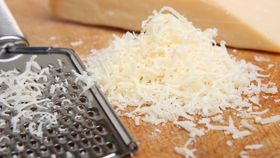


Many people love to sprinkle their pizza and pasta with parmesan cheese, but would you been so keen if you knew you were instead covering it with wood pulp? According to a report by Bloomberg, many store-bought grated parmesan products, alongside some other cheeses like mozzarella, are bulked out with a plant compound called cellulose, specifically derived from powdered wood pulp. That's the same thing that goes into making paper.
The report came after an investigation by the U.S. Food and Drug Administration (FDA) into the Pennsylvania-based food manufacturer Castle Cheese Inc., in which the FDA found that “no parmesan cheese was used to manufacture” the company’s “100% grated Parmesan Cheese.” Instead, it was found to be a mixture of cellulose and other cheese types. After the investigation, the president of Castle Cheese now faces up to a year in prison and a $100,000 dollar fine.
But following on from the FDA, Bloomberg then looked at other grated parmesans sold in grocery stores. They found that Jewel-Osco's Essential Everyday 100% Grated Parmesan Cheese was 8.8 percent cellulose, while Wal-Mart Stores Inc.’s Great Value 100% Grated Parmesan Cheese was 7.8 percent. Another from Whole Foods that didn’t list cellulose as an ingredient still contained 0.3 percent of the stuff. Cellulose is considered safe, but the acceptable level for food is between 2 and 4 percent.
While the companies might be using cellulose as a filler in levels above what is deemed acceptable, it’s probably not going to do you any adverse harm. In fact, because cellulose is fiber, it is sometimes used in laxative products, though the levels found in the store-bought parmesan probably won’t have the same effect on those who eat it. What the finding does feed into, however, is a growing number of food safety scandals and fraud cases.
One of the biggest food scandals in recent years was the discovery that ready meals and frozen burgers in the U.K. labeled as “beef” were actually found to contain traces of horse meat. While most of the products contained only very low levels of horse, one sample tested came back as containing a pretty shocking 29 percent equine meat. Again, the issue wasn’t necessarily the fact that it contained horse, but that the products were mislabeled, and therefore there were no checks on where the animals came from and whether they were safe for consumption.


 10
10