Space and Physics
 PUBLISHED




If you ever spill some mercury, don’t use your kitchen sponge. Not least because of its high toxicity, but also, because you’ll probably be there all day.
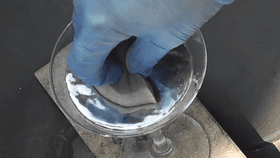
The rest of this article is behind a paywall. Please sign in or subscribe to access the full content.The GIF posted on Reddit comes from the YouTube channel TAOFLEDERMAUS. It shows the metallic liquid placed in a glass – a fancy martini glass, no less – and its odd reaction to getting absorbed by a sponge.

Image credit: TAOFLEDERMAUS/YouTube via Reddit
In the original video, many people believed it could be a fake or suggested the sponge needed to be more porous. So TAOFLEDERMAUS added a follow-up video with a variety different sponges, all of which showed a similar phenomenon.
Soaking liquids up with a sponge relies on a thing called capillary action. It’s the same mechanism used to suck up a straw, where intermolecular forces between the liquid and surrounding solid surfaces cause the liquid to flow against the force of gravity.
Mercury has a much higher surface tension compared to water, as you can kind of tell by the way it moves around and globs together. So, the intermolecular forces within the liquid are stronger than those between the solid and the liquid.