Space and Physics
 PUBLISHED


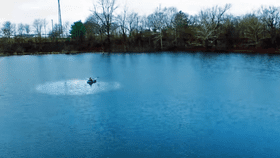


This video from YouTube channel What The Physics?! shows Greg Kestin, a theoretical physicist researcher at Harvard University, demonstrating some of the strange molecular properties of olive oil. All you need is a dollop of olive oil and a lake, but it makes for a pretty amazing experience.
Simply by pouring a tablespoon of olive oil into the middle of a lake, he first shows and then explains how oil floats on the surface of the water. It begins to spread until it creates a layer literally one molecule thick. Curiously, this layer appears to calm the waves of the lake caused by the breeze. As Greg points out, if you measure the size of the still water without waves, you can work out how big one molecule is.
It might seem like just a simple curiosity, but this principle actually has a wealth of applications, including anti-reflective “invisible glass” used for phone screens and glasses. Check out the video to learn how.
What the physics, indeed.